Norsel Textilmaschinen AG, a Swiss specialist in textile marking, labelling and tracking, plans to take part in ITMA Asia in Shanghai, where it will present its COMPASS RT and COMPASS GT software alongside its established identification technologies. The company says visitors can meet its team at the SINOTEX booth, H4.1-D06.
At the centre of the showcase is COMPASS, a software platform that Norsel is developing to give textile manufacturing greater transparency, control and connectivity. The portfolio builds on the company’s work in fabric identification and roll tracking and extends the scope for following products through production.
Roll-level tracking
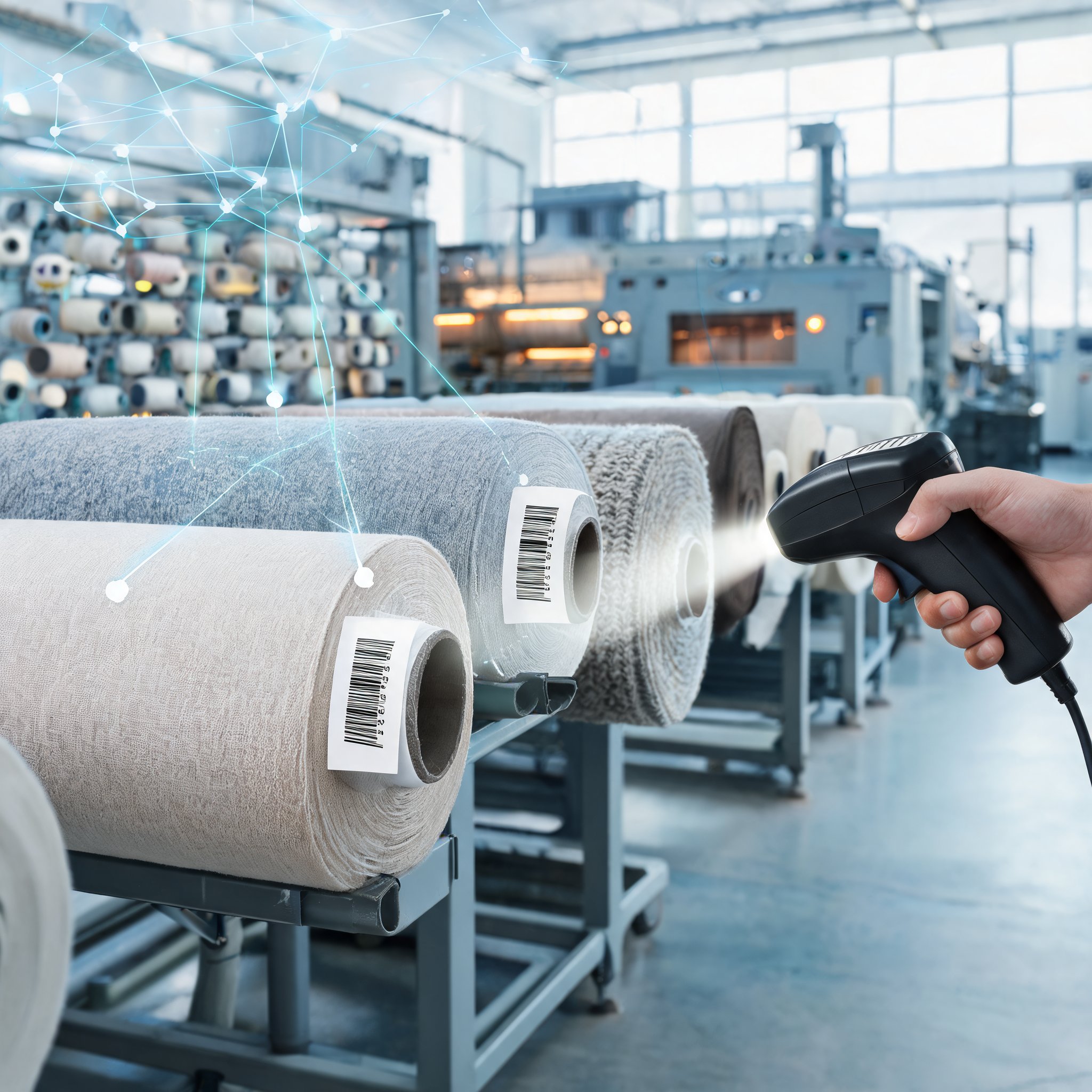
COMPASS RT is designed for fabric roll identification and traceability. It uses barcode-based tracking in production workflows and is intended to provide visibility across several manufacturing stages, connecting information from yarn and knitting through dyeing, finishing and later processes.
Garment-level tracking
COMPASS GT carries the tracking approach into garment production. It supports the identification and tracking of garments, with the aim of improving production visibility and information management. At the exhibition, visitors will be able to examine both COMPASS solutions and discuss possible applications in modern textile operations.
Linking labels to digital records
Norsel argues that increasingly complex supply chains are raising demands for accurate production data, operational efficiency, transparency and accountability. Its approach combines physical identification—labels, barcode technology and scanning equipment—with software for managing the resulting information.
According to Norsel, connecting these elements can help manufacturers:
- improve fabric and product traceability through production;
- reduce manual data entry and the risk of human error;
- minimise fabric losses and unnecessary rework;
- improve inventory visibility and roll identification;
- support more efficient production workflows; and
- build a stronger foundation for digital supply-chain transparency.
Digital product passport pressure
The company also points to growing attention on digital traceability and emerging Digital Product Passport requirements. In that context, Norsel says the ability to collect, connect and manage reliable product information is becoming an important part of the industry’s transformation.
Hardware and experience
Norsel has more than four decades of experience and bases its reputation on Swiss precision, dependable engineering and practical solutions for textile manufacturers worldwide. Its portfolio includes heat press machines, label printers, barcode scanners, weighing systems, specialised labelling materials and software.
The company’s technologies are used to identify different textile materials, including woven, knitted and non-woven fabrics, helping manufacturers maintain product information through processing. Norsel describes the evolution of COMPASS as another step in combining established industrial expertise with newer digital capabilities.
The company invites textile manufacturers, garment producers, technology partners, distributors and industry professionals to meet its team in Shanghai. At ITMA Asia, the focus will be on the latest COMPASS RT and GT developments, Norsel’s marking and tracking technologies, and ways to make production processes smarter, more transparent and more efficient.